
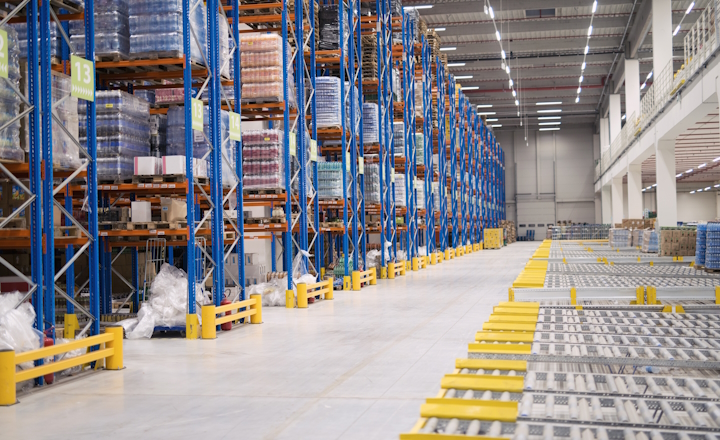
In the landscape of modern logistics, the efficiency of a warehouse is often dictated by the verticality and accessibility of its storage. Transitioning from floor stacking to a structured racking system is a significant step for any growing business, yet it is a move that requires meticulous planning. A poorly designed layout can lead to bottlenecked workflows, safety hazards, and underutilised cubic space.
Before committing to any capital investment in pallet racking storage solutions, it is essential to evaluate the operational requirements of the facility through a strategic lens. Considering the following factors will ensure that the resulting system is not only safe and compliant but also perfectly aligned with your supply chain objectives.
1. Load Capacity and Product Characteristics
The primary function of any racking system is to support weight safely. However, "weight" is a multifaceted variable. You must consider the maximum weight of your heaviest pallets, the average weight across the inventory, and the dimensions of the pallets themselves.
In Australia, standard pallet sizes (1165mm x 1165mm) differ from those used in Europe or the United States. If your supply chain involves international shipping, your racking must be versatile enough to accommodate varying footprints without compromising structural integrity. Furthermore, consider the nature of the goods; are they uniform boxes, or do they have overhangs that might interfere with uprights or fire suppression systems?
2. Forklift Compatibility and Aisle Width
A common error in warehouse design is selecting a racking system without considering the existing fleet of Materials Handling Equipment (MHE). The width of your aisles is directly dictated by the turning circle of your forklifts.
- Standard Wide Aisle: Typically requires 3.5 to 4 metres, allowing for standard counterbalance forklifts.
- Narrow Aisle (NA) or Very Narrow Aisle (VNA): Can reduce requirements to under 2 metres but requires specialised reach trucks or turret trucks.
If you are planning to maximise storage density by narrowing the aisles, you must factor in the cost of upgrading your machinery. Ensuring there is a harmonious match between the steel on the floor and the vehicles moving through them is vital for operational fluidness.
3. Inventory Throughput and Accessibility
How often do you need to access a specific pallet? This question determines the "selectivity" of your system.
- Selective Racking: Offers 100% accessibility to every pallet, ideal for businesses with high SKU counts and lower volumes per SKU.
- High-Density Racking (Drive-In or Push-Back): Maximises space by storing pallets multiple deep. This is excellent for high-volume, low-SKU operations but operates on a Last-In, First-Out (LIFO) basis, which may not suit perishable goods.
Understanding your stock rotation—whether it is First-In, First-Out (FIFO) or LIFO—will dictate the structural configuration of the bays.
4. Safety Standards and Structural Integrity
In Australia, pallet racking is governed by strict safety standards, specifically AS 4084.1:2023 and AS 4084.2:2023. These standards cover everything from the steel quality and fabrication to the installation and ongoing maintenance.
Before installation, a professional site assessment should include a review of the warehouse floor’s slab integrity. The floor must be level and capable of bearing the concentrated point loads exerted by the racking uprights. Neglecting the foundation of the building can lead to structural shifting, which, under the weight of several tonnes of inventory, poses a catastrophic risk to workplace safety.
5. Future Scalability and Flexibility
Warehouse needs are rarely static. A system installed today should be capable of evolving with the business. Consider modular systems that allow for beam height adjustments or the addition of extra bays as inventory grows.
Furthermore, evaluate the "life-cycle" of the racking. High-quality galvanised or powder-coated steel will resist the wear and tear of daily forklift impacts and environmental moisture, ensuring that the system remains a productive asset for decades rather than just a few years.
Conclusion
Installing a pallet racking system is more than just a purchase of steel; it is the implementation of a workflow engine. By accurately assessing load requirements, equipment compatibility, and safety compliance, you create a foundation for a leaner, safer, and more profitable warehouse operation. Seeking expert advice during the design phase ensures that the cubic space of your facility is used to its absolute maximum potential.
References
- Standards Australia: AS 4084.1:2023 (Steel storage racking – Design) and AS 4084.2:2023 (Steel storage racking – Operation and maintenance).
- Safe Work Australia: Guide to managing the risks of elevating work platforms and warehouse traffic management.
- CSIRO: Research on structural steel performance and corrosion resistance in industrial environments.
- Australian Logistics Council (ALC): Guidelines for warehouse efficiency and safety in the national supply chain.
| < Prev | Next > |
|---|