
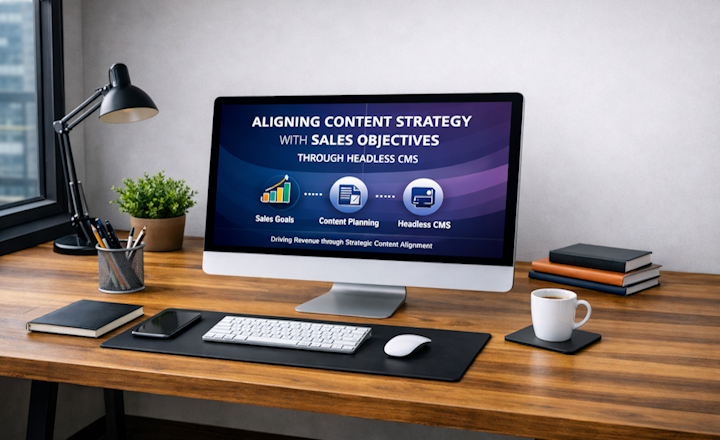
A strong content strategy should do more than publish useful information. It should support the commercial goals of the business and help sales teams move buyers through the decision-making process. In many organizations, however, content and sales objectives are not always fully connected. Marketing teams may create articles, landing pages, product pages, emails, and resources, while sales teams focus on conversations, proposals, demos, and closing deals. When these activities are not aligned, buyers may experience inconsistent messaging, missing information, or content that does not match their stage in the sales journey.
A headless CMS helps businesses align content strategy with sales objectives by creating a flexible and structured foundation for managing content across channels. Instead of treating content as separate assets locked inside individual platforms, a headless CMS allows teams to organize content into reusable components that can support websites, sales portals, digital sales rooms, emails, product pages, and proposal experiences. This makes it easier to connect content planning with sales goals, such as lead generation, buyer education, conversion, account expansion, and regional growth. When content is structured around sales objectives, every resource becomes more purposeful and easier to use throughout the buyer journey.
Creating a Shared Foundation Between Content and Sales
One of the biggest reasons content strategy becomes disconnected from sales objectives is that teams often work from different systems and priorities. Content teams may focus on publishing schedules, brand messaging, and audience engagement, while sales teams focus on lead quality, deal progression, objections, and conversion. Storyblok CMS for developers can help create a more flexible shared foundation where content structures are easier to manage, update, and connect to sales needs. Both perspectives matter, but without a shared foundation, content may not fully support the realities of the sales process.
A headless CMS creates a shared foundation by giving content, marketing, sales, and product teams one structured environment for managing important messaging. Product descriptions, value propositions, customer proof points, buyer pain points, use cases, pricing explanations, and calls to action can all be organized in a way that supports both content strategy and sales execution. This makes content easier to connect to real sales needs.
When teams work from the same content foundation, communication improves. Sales teams can see which approved resources are available, while content teams can understand how those resources support buyer conversations. Instead of producing content in isolation, the business can create materials that directly support sales goals. A headless CMS helps turn content strategy into a practical part of the revenue process.
Mapping Content to Sales Funnel Stages
Sales objectives often change depending on where the buyer is in the funnel. At the awareness stage, the goal may be to attract attention and educate buyers about a challenge. At the consideration stage, the goal may be to explain product fit, compare options, and build trust. At the decision stage, the goal may be to reduce risk, answer objections, and support final approval. If content is not mapped to these stages, buyers may receive the wrong information at the wrong time.
A headless CMS helps teams map content more clearly to sales funnel stages. Content can be tagged and structured according to awareness, consideration, evaluation, decision, onboarding, or expansion. This makes it easier for marketing teams to plan the right resources and for sales teams to find content that fits the buyer’s current needs.
This stage-based structure improves the buyer experience because each piece of content has a clear role. A buyer who is still learning can receive educational guidance, while a buyer close to purchase can receive proof, pricing context, implementation details, or proposal support. By connecting content to funnel stages, businesses can make their content strategy more directly aligned with sales progression and conversion goals.
Supporting Lead Generation With Targeted Content
Lead generation is often one of the most important sales objectives. Businesses need content that attracts the right buyers, encourages engagement, and creates opportunities for sales conversations. However, lead generation content can become too broad if it is not connected to specific buyer needs and sales priorities. High traffic does not always mean strong leads, especially if the content attracts audiences that are unlikely to convert.
A headless CMS supports targeted lead generation by allowing teams to organize content around audience segments, industries, buyer personas, product interests, and campaign goals. Landing pages, guides, resource hubs, comparison pages, and calls to action can be built from structured content components that match specific sales priorities. This helps teams create more focused content experiences for the buyers they actually want to reach.
For sales teams, better targeting improves lead quality. Buyers who engage with relevant content are more likely to understand the problem, recognize the value of the solution, and be ready for a meaningful conversation. A headless CMS gives marketing teams the flexibility to create targeted lead-generation experiences quickly, while ensuring that the content remains aligned with the messages sales teams will use later in the journey.
Making Buyer Education More Sales-Focused
Buyer education is an essential part of content strategy, especially in complex sales environments. Buyers often need to understand the problem, the solution category, the product’s value, and the practical impact before they feel ready to speak with sales or make a purchase. However, educational content can sometimes become too general if it is not connected to sales objectives. It may inform the buyer without guiding them toward the next step.
A headless CMS helps make buyer education more sales-focused by connecting educational resources to sales stages, buyer questions, and conversion paths. Articles, guides, explainers, videos, product pages, and resource hubs can be organized around the information buyers need before moving forward. Content can also be linked to relevant calls to action, related resources, or sales follow-up materials.
This makes educational content more purposeful. Instead of simply publishing information, teams can create learning paths that support buyer progression. A buyer who reads an introductory article can be guided to a use case page. A buyer who reviews a use case can be shown customer proof. A buyer who engages with proof can be encouraged to book a demo or speak with sales. Headless CMS helps turn buyer education into a structured part of sales enablement.
Improving Sales Enablement Through Structured Content
Sales enablement depends on giving representatives the right materials for the right situations. Sales teams need content that helps them explain value, answer objections, support different buyer roles, and move deals forward. If content is difficult to find or not organized around sales needs, representatives may create their own materials or use outdated resources. This weakens both efficiency and consistency.
A headless CMS improves sales enablement by structuring content in a way that reflects how sales teams actually work. Resources can be organized by product, persona, industry, funnel stage, objection, region, and content type. This allows representatives to quickly find materials that match the buyer conversation they are having. A sales portal or enablement tool can pull content directly from the CMS, ensuring that teams use approved and current resources.
This supports sales objectives because representatives spend less time searching and more time selling. They can respond faster to buyer questions, provide more relevant follow-up, and maintain consistent messaging across conversations. A headless CMS makes content strategy more useful to sales teams by turning content into an accessible and practical enablement system.
Aligning Messaging Across Marketing and Sales Channels
Buyers often move between marketing and sales channels before making a decision. They may first interact with a campaign, then visit a product page, receive an email, attend a demo, review a proposal, and speak with multiple stakeholders. If the messaging changes across these touchpoints, the buyer journey can feel fragmented. This can reduce trust and slow down the sales process.
A headless CMS helps align messaging across channels by allowing approved content to be reused in multiple formats. The same value proposition can support a landing page, sales email, digital sales room, product page, and proposal section. Each channel can present the content differently, but the core message stays consistent. This gives buyers a clearer and more connected experience.
This alignment directly supports sales objectives because buyers are less likely to become confused or uncertain. Sales teams can continue the message that marketing introduced, rather than correcting or replacing it. Marketing teams can create content with confidence that it will support later sales conversations. Headless CMS connects content strategy and sales execution through shared, reusable messaging.
Personalizing Content Around Sales Priorities
Personalization is valuable when it helps buyers receive information that matches their needs. Sales teams often have specific objectives for different segments, such as increasing conversions in one industry, supporting enterprise accounts, improving regional sales, or expanding existing customers. A generic content strategy may not be enough to support these goals. Content needs to adapt based on the audience and sales objective.
A headless CMS supports personalization by allowing content to be structured into reusable modules. Teams can create variations for different industries, buyer personas, regions, products, account types, or funnel stages. These modules can then be assembled into personalized web pages, emails, sales portals, proposal experiences, and follow-up resources.
This makes personalization more scalable and more aligned with sales goals. For example, if a business wants to grow in a specific market, teams can create region-specific proof points, localized calls to action, and tailored product messaging. If the goal is to convert more technical buyers, teams can provide deeper integration and implementation content. Headless CMS helps content strategy respond directly to sales priorities without requiring every asset to be built from scratch.
Helping Sales Teams Respond Faster to Buyer Needs
Speed is an important sales objective because delayed responses can weaken momentum. When buyers ask for additional information, sales teams need to provide relevant resources quickly. If content is scattered across folders, old documents, and disconnected platforms, representatives may struggle to find the right material. This can create friction and make the buying experience feel less professional.
A headless CMS helps sales teams respond faster by creating a central source of approved content. Product details, customer examples, objection responses, pricing explanations, and implementation guidance can be organized and delivered through sales tools, portals, or internal platforms. Representatives can quickly locate the right content based on buyer need, sales stage, or topic.
Faster response times support conversion because buyers receive answers while interest is still active. A prospect who asks about implementation can receive a relevant guide. A decision-maker who wants proof can receive a matching case study. A technical stakeholder who needs integration details can receive accurate documentation. Headless CMS helps ensure that content strategy supports the practical speed required in sales execution.
Conclusion
Aligning content strategy with sales objectives requires more than creating more content. It requires a structured system that connects messaging, buyer needs, sales stages, performance insights, and revenue goals. A headless CMS provides this system by allowing teams to manage content centrally, reuse approved components, deliver content across channels, and adapt messages for different audiences, regions, and sales priorities.
For sales teams, this means faster access to relevant materials, more consistent messaging, stronger follow-up, and better support throughout the buyer journey. For marketing and content teams, it means clearer alignment with commercial goals, easier content reuse, better governance, and more measurable impact. Buyers also benefit because they receive information that feels connected, timely, and useful at each stage of their decision process.
As sales journeys become more digital and complex, businesses need content strategies that are directly connected to sales execution. Headless CMS makes that connection easier to manage. It helps turn content from a collection of separate assets into a scalable revenue resource that supports lead generation, conversion, account-based selling, regional growth, and customer expansion.
| < Prev | Next > |
|---|