
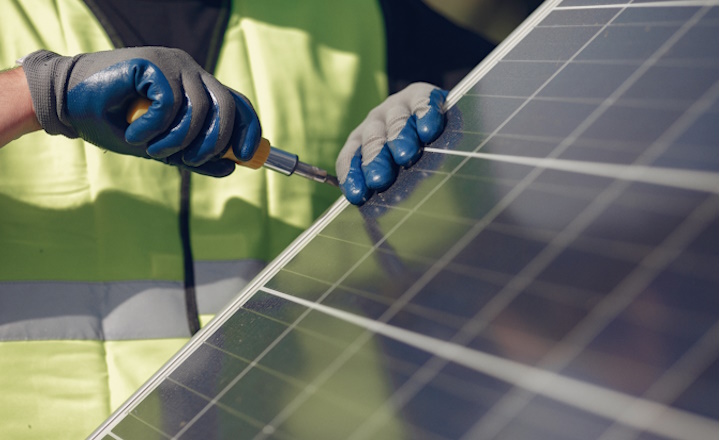
Solar power is already a familiar part of life in Western Australia. The next step may be making it cheaper and easier to build, install and connect.
That is the thinking behind the Australian Renewable Energy Agency (ARENA)’s latest work on ultra-low-cost solar. ARENA says Australia needs to look beyond the solar panel itself and find better ways to reduce the costs of construction, installation and project delivery.
For a state like Western Australia, with its sunny, spread-out, and already leaning heavily on solar, this shift is a game-changer. That includes towns like Wagin, well outside the Perth metro area, where solar already makes practical sense for plenty of properties.
Australia is Moving Towards Lower-Cost Solar
ARENA's Ultra Low-Cost Solar White Paper Update, released on 30 July 2026, is essentially a progress report on Australia's push to make solar dramatically cheaper, not just the panels themselves, but everything involved in getting them built and connected to the grid.
ARENA CEO Darren Miller summed up the shift in focus plainly: the challenge now is less about what gets installed and more about how it gets delivered. Solar technology keeps improving, but large-scale project delivery, including construction timelines, labour, and logistics has become the bottleneck slowing everything down.
To tackle that, ARENA's white paper points to a handful of projects testing new ways of building solar faster and more safely, including:
5B's modular solar systems, which are pre-assembled and deployed in large sections rather than built panel-by-panel on site
Built Robotics' automated piling technology, which speeds up the groundwork stage of a solar farm
Nextpower's deployment technologies, aimed at streamlining how components come together on site
Luminous Robotics' installation systems, designed to reduce manual labour during installation
None of this means solar is suddenly free, or that costs will fall overnight. ARENA has been upfront that workforce shortages, a tougher investment climate, grid connection delays and inflation are all still real pressures on the sector. But the direction is clear: automation and smarter construction methods are where the next round of cost savings is expected to come from, on top of the panel efficiency gains that have already happened.
Why Western Australia is Well-Positioned for Solar
WA already has a substantial base of rooftop and large-scale renewable generation.
The WA Government reports that 41% of electricity generated on Western Australia's main electricity grid came from renewable sources in 2025, with household solar accounting for half of that renewable generation. Household solar can collectively provide around 2.5 GW of generation capacity at full output.
That makes rooftop solar more than a niche technology in WA. It is already part of the state's electricity system.
Perth has a large concentration of rooftop solar, but regional WA should not be overlooked. Larger properties, farms, workshops and small businesses can have considerable roof space and daytime electricity demand.
For these properties, solar can be worth investigating alongside the property's actual electricity usage rather than simply choosing a system based on size.
Batteries Are Becoming Part of the Picture
Solar generation is strongest during daylight hours. Battery storage provides another option, which is keeping some of that generated electricity and using it later.
A battery can store excess electricity generated by a solar system rather than allowing all of it to be exported or used immediately. That stored electricity can then be used when solar generation is lower.
WA's energy system is also moving towards greater use of batteries. The WA Government reported in May 2026 that more than 20,000 WA households had benefited from the state's Residential Battery Scheme. It also reported that batteries were contributing 37.2% of peak demand on the WA grid during one May 2026 peak-demand event.
That does not mean a battery will be financially worthwhile for every household. Its usefulness depends on electricity consumption, solar generation, battery size, tariffs and the way the system is operated.
What Cheaper Solar Could Mean for Regional WA
The benefits of lower-cost solar are not limited to big energy projects:
Homes
For households, solar can generate electricity during daylight hours and, where appropriate, batteries can store some of that generation for later use. The right setup depends on the household's consumption, roof space and system design.
Farms and Rural Properties
Farms can have very different electricity profiles from suburban homes. Pumps, machinery, refrigeration and other equipment may create substantial daytime demand, making solar generation worth investigating.
Workshops and Small Businesses
A workshop or small business operating through the day may also be able to use a greater share of its solar generation directly, although the economics will depend on its particular consumption and electricity arrangements.
The important point is that cheaper solar technology does not mean every property needs the same system.
Solar Opportunities in Wagin
Wagin is a good example of a regional WA community where solar already has an obvious role to play, and where cheaper delivery costs down the track could open that up further.
A lot of the electricity use on properties around Wagin happens during daylight hours. Think irrigation pumps, workshop equipment, cool rooms, and general farm operations, which lines up well with when solar actually generates power.
Clean Energy Regulator data shows the Wagin postcode area has already recorded over 400 small-scale solar installations, and the region has strong solar conditions, with solar comparison data estimating around 5 peak sun hours per day.
That said, solar isn't a one-size-fits-all purchase, particularly on rural and semi-rural properties. The right setup for a Wagin farmhouse looks different to what suits a small business in town, and getting a proper assessment matters more than chasing the cheapest quote.
This is where working with an experienced local provider counts; outfits like Volt Air, who work with solar installers Wagin residents already turn to, are used to sizing systems around the realities of rural properties rather than a generic template.
Solar Installation Still Requires Qualified Electrical Work
The technology may be changing, but solar remains an electrical installation.
A typical solar PV system also involves an inverter, electrical protection, cabling, switchboard equipment and a connection to the property's electrical installation and, where applicable, the grid.
WA Consumer Protection notes that the inverter converts electricity from the solar panels into a form suitable for household use and grid supply, while batteries can store excess solar generation for later use.
Further, solar and battery installations need to meet applicable electrical and connection requirements. WA's updated 2026 requirements make this particularly important for new and upgraded systems on the South West Interconnected System.
Using a properly qualified electrician and an appropriately accredited solar installer is therefore part of getting the job done properly.
Guide to Choosing the Right Solar System
None of the national-level progress changes the basics of getting a system that actually fits a property. The right setup depends on a combination of factors:
Electricity consumption: How much power the property uses, and when
Roof orientation and available space: North-facing roofs generally perform best in WA
Shading: From trees, sheds or neighbouring structures
Panel and inverter quality: Not all equipment is built to the same standard
System size: Matched to actual usage, not just roof space
Battery requirements: If storage is wanted, and how much
Grid connection requirements: Particularly relevant for rural properties
Electrical safety and installation quality: Non-negotiable, regardless of system size
There's no shortcut that replaces a proper site assessment, and anyone promising a fixed dollar saving before they've looked at a property's actual usage is skipping a step.
Regional WA is Part of Australia's Solar Future
Australia's move towards ultra-low-cost solar is about more than cheaper panels. ARENA's current work points towards a broader change in how solar systems are designed, constructed, installed and connected.
For regional WA, the future of solar may be less about chasing the biggest system and more about finding the right system for the property, the people using it and the electricity they actually need.
| < Prev | Next > |
|---|