
Big environmental goals sound impressive, but they can also feel distant from the reality of a normal working day. Most businesses aren’t spending every morning discussing carbon targets or waste strategy. They’re answering emails, serving customers, managing staff, ordering supplies and trying to keep operations running smoothly.
That’s why environmental responsibility often works best when it stops feeling like a special project. Providers such as Releaf Eco Services can help businesses build practical systems around waste, resource use and everyday operations so that better environmental choices become part of the routine rather than something people have to remember from scratch each time.
Habits Beat One-Off Campaigns
A workplace might run a recycling push for a month, send a few emails about reducing waste and put up some new signs. For a while, everyone pays attention. Then workloads increase, priorities shift and the enthusiasm fades.
That’s a common problem with one-off sustainability campaigns. They rely heavily on attention and motivation, both of which are limited resources in a busy workplace. Habits are different. Once a process becomes familiar, people can follow it with much less effort.
If staff always know which bin to use, where reusable items are stored and what the end-of-day shutdown routine looks like, the environmentally responsible option becomes the default. That’s much more durable than hoping people will remember a campaign slogan from three months ago.
Make the Better Choice the Easier Choice
People are far more likely to follow a process when it’s convenient.
If the recycling bin is on the other side of the building while general waste sits under every desk, most recyclable material will probably end up in general waste. If reusable kitchenware is difficult to find but disposable items are stacked on the bench, the disposables will get used.
Small design decisions can shape behaviour.
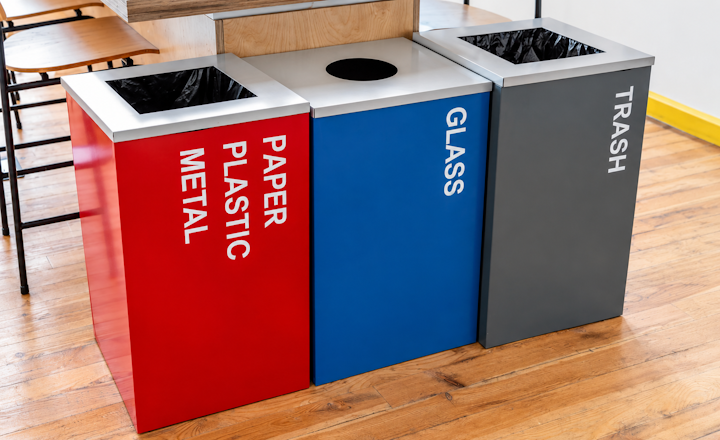
Put the right bins where the waste is created. Keep clear labels visible. Store reusable supplies where people naturally look for them. Make energy-saving settings automatic where possible. The less effort required, the more likely the behaviour is to stick.
Consistency Matters Across the Workplace
Mixed messages create confusion.
If one floor has clearly separated waste streams but another uses a completely different system, staff have to keep relearning the rules. The same applies to purchasing, cleaning and shutdown procedures.
Consistency reduces friction. A person should be able to move from one part of the workplace to another and understand what’s expected without needing another set of instructions.
This doesn’t mean every location has to be identical. Different areas may produce different waste or have different operational needs. But the underlying logic should feel familiar.
Purchasing Decisions Shape Future Waste
Environmental responsibility doesn’t begin at the bin. It often begins at the point of purchase.
Every product brought into a workplace eventually creates some kind of waste, whether that’s packaging, worn-out materials or the product itself at the end of its life. Choosing more durable items, reducing unnecessary packaging and using refillable or reusable alternatives can help lower waste before disposal even becomes an issue.
These decisions don’t have to be dramatic. A business might gradually switch certain supplies, ask vendors about packaging options or prioritise products that last longer.
When procurement habits change, waste reduction can happen almost automatically downstream.
Staff Buy-In Comes From Practicality
People are more likely to support environmental initiatives when they can see how they fit into real work.
If a new process adds ten unnecessary steps to a simple task, resistance is predictable. If the change is practical and clearly explained, it’s much easier to adopt.
It helps to avoid presenting sustainability as a moral test. Staff don’t need to feel guilty every time something ends up in the wrong bin. They need straightforward systems, clear expectations and enough information to understand why the process exists.
That tone usually creates better long-term engagement than constant reminders about what people are doing wrong.
Small Improvements Can Compound
One change may seem insignificant on its own. Switching off unused equipment, reducing disposable supplies or separating one additional waste stream doesn’t transform a business overnight.
Repeated across months and years, though, those changes can add up.
The same is true across a larger organisation. One office improving its recycling system may have a modest impact. Ten sites doing the same thing consistently create a much larger shift.
This is why routine matters so much. Environmental progress often comes from repetition rather than spectacle.
Review the System Occasionally
Routine shouldn’t mean never changing anything.
Workplaces evolve. Staff numbers change, waste volumes shift, suppliers change and new products or processes are introduced. A system that worked well two years ago may no longer suit the business.
An occasional review helps identify where things have drifted. Are bins being contaminated more often? Has a new department started producing a different type of waste? Are energy costs rising unexpectedly? Are staff bypassing a process because it no longer makes sense?
The aim isn’t to constantly reinvent the system. It’s to keep it useful.
Sustainability Should Fade Into the Background
The strongest environmental systems are often the least dramatic.
People don’t stop to congratulate themselves every time they use the correct bin or turn off equipment at the end of the day. They simply do it because that’s how the workplace operates.
That’s when environmental responsibility becomes sustainable in the truest sense of the word. It no longer depends on a campaign, a manager’s enthusiasm or a burst of motivation. It becomes embedded in ordinary behaviour.
Businesses don’t need every action to be perfect. They need systems that are clear, practical and repeatable. Once those systems become routine, better environmental outcomes are far more likely to last.
| Next > |
|---|