
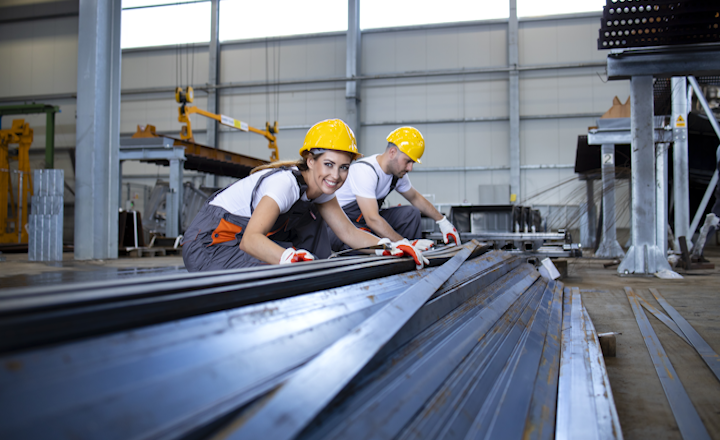
Metal fabrication is a fundamental process in modern manufacturing and construction industries. It involves shaping, cutting, and assembling metal materials to create components used in machinery, infrastructure, and various industrial applications. Businesses across many industries rely on metal fabrication processes to produce precise and durable metal parts.
Manufacturers specialising in metal fabrication Melbourne provide services that transform raw metal materials into finished products used in construction, automotive manufacturing, and industrial equipment. Skilled metal fabricators in Melbourne use advanced tools and techniques to create custom metal components that meet specific design requirements.
Understanding The Metal Fabrication Process
Metal fabrication involves several stages that transform raw metal sheets or bars into finished products. The process often begins with cutting the metal into the required shape or size.
Various cutting techniques are used depending on the material and design requirements. Laser cutting, plasma cutting, and mechanical cutting are commonly used to create precise shapes.
Once the metal pieces are cut, they may undergo forming processes such as bending or rolling to achieve the desired structure. These shaping processes allow manufacturers to create components with specific angles or curves.
The final stage typically involves welding or fastening the components together to create the finished product.
Applications Across Multiple Industries
Metal fabrication supports a wide range of industries because metal components are used in many types of products and structures. Construction projects rely on fabricated metal beams, frames, and supports that provide structural stability for buildings and infrastructure.
In the automotive industry, fabricated metal parts are used to manufacture vehicle components such as frames, brackets, and exhaust systems. Precision fabrication ensures that these parts meet strict performance standards.
Industrial equipment manufacturers also depend on metal fabrication to produce machine housings, protective enclosures, and structural frames.
Because of its versatility, metal fabrication remains essential in many areas of modern manufacturing.
Precision And Customisation In Fabrication
One of the key advantages of metal fabrication is the ability to create custom components tailored to specific project requirements. Advanced fabrication equipment allows manufacturers to produce highly precise parts that match engineering specifications.
Computer controlled cutting machines and digital design systems ensure that each component is manufactured with accuracy. This precision is especially important in industries where even small deviations could affect performance.
Custom fabrication allows businesses to design specialised equipment and structures that meet their unique operational needs.
Durability And Material Strength
Metal is widely used in manufacturing because of its strength and durability. Fabricated metal components are capable of withstanding heavy loads, high temperatures, and challenging environmental conditions.
Different types of metals can be selected depending on the application. Steel is commonly used for structural components, while aluminium is often chosen for lightweight applications.
The fabrication process preserves the strength of these materials while shaping them into functional products.
Advanced Fabrication Technologies
Modern metal fabrication relies on advanced technologies that improve efficiency and precision. Computer numerical control machines allow operators to program detailed cutting and shaping processes that are performed automatically.
These automated systems reduce human error and ensure consistent results across production batches. They also enable manufacturers to create complex designs that would be difficult to achieve using manual methods.
Technological advancements have significantly improved the speed and quality of metal fabrication processes.
Quality Control And Industry Standards
Maintaining high quality standards is essential in metal fabrication because fabricated components often play critical roles in structural or mechanical systems.
Manufacturers perform inspections and testing to ensure that components meet design specifications and safety requirements. Welding quality, dimensional accuracy, and material integrity are carefully evaluated during production.
Quality control procedures help ensure that fabricated components perform reliably in their intended applications.
Conclusion
Metal fabrication is a vital process that supports modern construction, manufacturing, and industrial development. By transforming raw metal materials into precise components, fabrication specialists enable industries to build complex structures and machinery. Through advanced technology and skilled craftsmanship, metal fabrication continues to play a crucial role in producing durable and reliable products used across a wide range of industries.
| < Prev | Next > |
|---|