


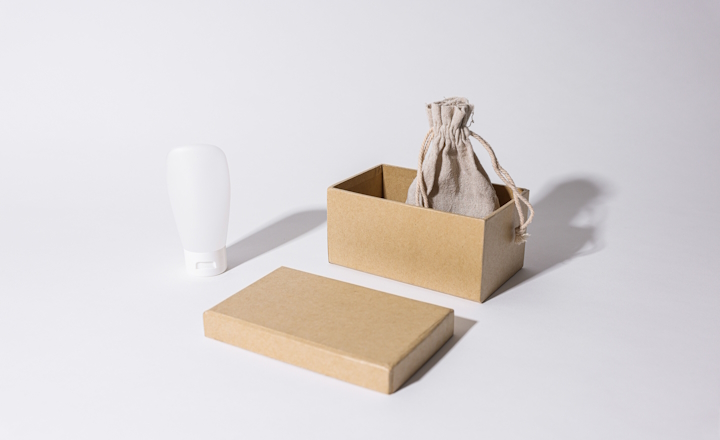
Packaging is often viewed simply as a container for a product, but its role extends well beyond holding an item. The right packaging can protect products during handling, support efficient storage and transport, provide essential information, and influence how customers perceive what they are buying.
For businesses, packaging also creates a physical connection between a product and its intended market. Its materials, structure, appearance, and functionality can all contribute to how effectively a product moves through retail, delivery, or customer-facing environments.
Protecting Products During Handling and Transport
One of the primary purposes of packaging is to protect its contents from damage. Products can experience movement, pressure, impact, moisture, dust, and repeated handling between manufacturing, storage, transportation, and the final customer.
The level of protection required depends on the nature of the product. Fragile items may require stronger board, internal inserts, cushioning, or compartmentalised structures, while lightweight retail products may need a simpler carton designed primarily to prevent surface damage and maintain presentation.
Good packaging should therefore match the product's physical characteristics and distribution environment. Using too little protection can increase the risk of damaged goods, while excessive packaging may add unnecessary material, storage, and shipping requirements.
Supporting Storage and Efficient Transportation
Packaging also plays an important operational role before a product reaches the customer. Well-designed packages can make products easier to stack, organise, store, and transport.
Consistent dimensions can help businesses use warehouse and shipping space more efficiently. Foldable or flat-packed packaging can also reduce storage requirements before assembly, which can be particularly useful for businesses ordering packaging in larger quantities.
The structure of a package can influence transportation efficiency as well. Packaging that fits closely around a product can reduce unnecessary empty space, while appropriately designed cartons can make handling and stacking more predictable. These considerations can affect both logistics and overall operating costs.
Communicating Product Information
Packaging provides a practical surface for communicating information that customers and handlers may need. Depending on the product category, this can include the product name, dimensions, ingredients, usage instructions, warnings, storage information, barcodes, recycling information, and business details.
Clear information is particularly important in retail environments where customers may make purchasing decisions based largely on what they can see on the package.
The available space needs to be used carefully. Important information should remain readable without making the package visually crowded. Businesses may also need to consider regulatory or industry-specific labelling requirements when determining what information must appear on the packaging.
Creating Brand Recognition and Product Differentiation
Packaging can also help customers distinguish one product from another. Colour, typography, graphics, structure, materials, and finishing choices can contribute to a recognisable visual identity.
This becomes particularly relevant when similar products compete for attention in retail environments. A package does not necessarily need elaborate decoration to stand out. A consistent structure and clear visual identity can be enough to make products easier for customers to recognise.
The physical format can contribute to this distinction as well. For example, gift-oriented products may use presentation-focused structures, while takeaway or retail products may prioritise convenience. Packaging formats such as custom pillow boxes in Australia can provide a distinctive shape for small products, gifts, accessories, and promotional items while also creating a defined surface for branding and product information.
The objective should be to connect the packaging's appearance with the product and its intended audience rather than adding decorative features without a clear purpose.
Improving Convenience and Product Usability
Packaging can influence how easily customers handle, open, carry, store, and dispose of a product. Convenience is therefore another important function.
Features such as handles, resealable closures, tear strips, windows, easy-open tabs, and appropriately sized openings can make packaging more practical. However, these features should be selected according to how the product is actually used.
For takeaway products, carrying and closure may be particularly important. For retail products, easy opening and secure storage may matter more. For gifts, presentation and handling may be higher priorities.
Good packaging considers the interaction between the customer and the product. A package that protects an item effectively but is unnecessarily difficult to open may still create a poor user experience.
Supporting Sustainability and Responsible Material Use
Packaging decisions can also influence a product's environmental impact. Material selection, package size, durability, recyclability, and the amount of packaging used all deserve consideration.
Using more material does not automatically create better packaging. A package that is unnecessarily large may require additional raw materials and occupy more space during transportation. On the other hand, packaging that is too lightweight for its intended purpose may result in damaged products and additional waste.
Businesses can therefore consider whether the chosen material is appropriate for the product, whether the structure uses material efficiently, and whether the package can be recovered or recycled through available systems.
Sustainability should be considered alongside functionality rather than treated as a separate feature. The most appropriate solution is generally one that provides the required protection and usability without unnecessary material or structural complexity.
Supporting the Overall Customer Experience
Packaging brings together many of these functions at the point where the customer receives the product. It can influence the first physical impression, communicate information, protect the contents, and affect how convenient the product is to handle.
This is why packaging decisions should begin with the product and its operating requirements rather than appearance alone. Businesses can first identify what the package needs to protect, how it will be transported, what information must be displayed, how customers will interact with it, and what environmental considerations apply.
Once these requirements are established, the structure, material, size, printing, and finishing can be selected accordingly. This approach helps prevent packaging from becoming unnecessarily complicated while ensuring that important functions are not overlooked.
Ultimately, the purpose of packaging is not limited to enclosing a product. Effective packaging protects contents, supports logistics, communicates information, reinforces product identity, improves usability, and can contribute to more responsible material use. When these functions are considered together, packaging becomes an important part of the overall product experience and business operation.
| < Prev | Next > |
|---|