
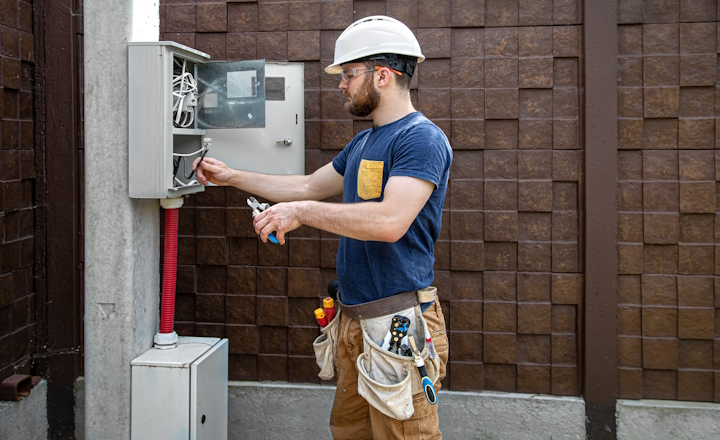
Open your meter box for a moment. The labels, the safety switches, the order of things; that little panel quietly keeps your whole house honest. When the switchboard is modern and well set out, faults are caught early and appliances live longer. When it is old or messy, you get tripping, scorch marks, and repair bills that always arrive at the worst time. Before you throw money at gadgets, talk with an affordable electrician in Melbourne who can map out priorities room by room. If you prefer to trust social proof, book a highly reviewed electrician and ask for a straightforward plan, not a hard sell.
Victoria’s Standards and Regulations
Here’s the thing. Victoria has lifted the baseline for safety in rentals; that shift has nudged many owner-occupiers to follow suit. Consumer Affairs Victoria is clear that rental properties must have a modern switchboard with circuit breakers and electrical safety switches, also known as RCDs or RCBOs. That is not a suggestion; it is a minimum standard that rental providers must meet. The same features protect owner-occupied homes too, and bringing an older board up to that level is often the cheapest way to cut future risk.
Let me explain what “modern” means in plain English. At minimum, you should see proper circuit breakers for overcurrent protection and residual current protection for electric shock. In many homes, the cleanest solution is an RCBO on each circuit. An RCBO combines the job of a breaker and an RCD in a single device, which reduces nuisance trips and makes faults easier to trace. Think of it like giving every circuit its own seatbelt rather than sharing one across the whole car.
Knits and Grits of Switchboards In Melbourne Homes
Now to the part that quietly costs Melbourne households money: surges and messy earthing. Modern fridges, induction cooktops, heat pumps, gaming consoles and smart TVs do not like spikes. Coordinated surge protection at the board, plus quality point-of-use protection where it counts, prevents that annoying pattern of small failures that somehow always fall outside warranty. Surges are more noticeable as rooftop solar spreads, because there is simply more sensitive electronics at play in a typical home. Australia passed four million rooftop systems and added more than three hundred thousand in 2024 alone, which is brilliant for bills and emissions but a reminder to keep protection fit for purpose.
You know what else lives on the switchboard now? The first draft of your EV charging plan. A 7 kW single-phase charger is roughly the same draw as a big oven running flat out. It needs a dedicated circuit sized for the route and ambient conditions, and the right kind of residual current protection. Depending on the charger, that might be a Type B RCD upstream, or a Type A if the charger has its own DC fault detection device to the relevant IEC standard. Choose poorly and you either get nuisance trips that drive you mad, or you miss the very fault the device is meant to catch. The principle is simple; protection must match the behaviour of the load.
If you are adding solar and later a battery, the board deserves a little design care before the panels go up. Installers like a tidy main switch layout, clear labelling for solar and storage isolators, and enough space for extra devices you might want next year. Many headaches are avoided by planning cable routes and spare DIN space in advance. The Clean Energy Council’s latest reports show batteries are climbing from a small base and policy is pushing that curve harder, which means your meter box will only get busier over the next few seasons. Spending another hour on design now saves a day of rework later.
So what does a sensible upgrade path look like for a typical home that is starting to creak? First, a health check with testing rather than guesswork. A licensed electrician measures fault loop impedance, RCD trip times, and insulation resistance; those numbers guide the plan. Next, a switchboard refresh that replaces tired breakers with RCBOs, adds surge protection, and tidies neutral and earth bars so future work is faster and safer. After that, targeted fixes such as replacing brittle outdoor points, relocating vulnerable sockets, or correcting poor terminations that were never quite right.
Documentation matters more than people think. Ask for a photo of the board before and after, RCD and insulation test results, and a simple circuit schedule that a tired parent can read at 2 am. If you later add a charger or a heat pump, that pack lets the next sparkie work quickly without tearing your place apart. Energy Safe Victoria’s templates for electrical safety checks show the spirit of what good records look like; your upgrade file can follow the same idea.
Here’s a small contradiction that makes sense once you see it up close. A switchboard upgrade costs money; the aim is to spend less over the life of the home. When protection, cabling and labelling are right, you get fewer mystery call-outs, fewer damaged appliances, and fewer weekend emergencies. The bill you avoid is the one that arrives with a failed fridge full of food or a tripped circuit that knocks out your home office before a deadline.
Season matters in Melbourne. Summer heat pushes air conditioning and fridges; winter brings damp that creeps into older outdoor fittings. A board with clear protection and proper segregation helps both seasons go by without drama. If you want a quick sanity check, stand back and ask two things. Can you read the schedule and understand what will turn off if a device trips? And are key circuits, like kitchen and laundry, protected exactly as you would expect if you were the person touching a wet benchtop?
There is also a people side to this. The highest skill is not only pulling cable; it is explaining choices. A good electrician will talk through Type A versus Type B protection, when an RCBO makes sense, and why surge devices are cheap insurance in a house with solar, smart speakers and a games console in every bedroom. You should feel that you are making informed decisions, not buying alphabet soup.