
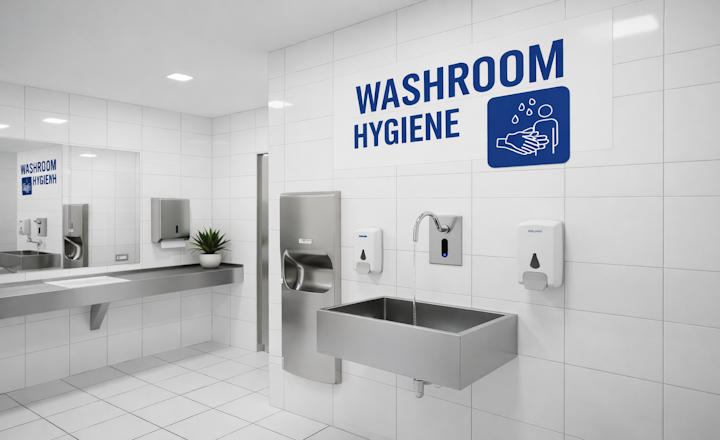
Washrooms are rarely discussed in management meetings unless something has gone wrong. A complaint about odour. An overflowing unit. A comment from a visitor. Yet behind the scenes, restroom hygiene is one of the most quietly important aspects of facility management.
It’s not just about appearance. It’s about systems.
In commercial environments — offices, retail stores, medical centres, hospitality venues — washroom standards influence comfort and perception. People may not openly evaluate a restroom, but they notice when something feels neglected.
Routine cleaning addresses visible surfaces. Floors are mopped. Basins are disinfected. Mirrors are polished. What often goes unexamined, however, is how specific waste streams are managed.
Sanitary waste requires structured handling. It cannot simply be treated as general rubbish. Containment, frequency of removal, and transport methods all affect hygiene outcomes.
Businesses that rely on internal cleaning alone sometimes underestimate how much coordination this requires. Without clear schedules and proper containment units, waste can remain longer than appropriate. That delay increases odour risk and creates discomfort for users.
This is why many facilities incorporate sanitary bin disposal services into their broader hygiene management plan — not as an add-on, but as a scheduled operational component.
The value lies in consistency.
Instead of relying on ad hoc checks, servicing follows an agreed timetable. Units are replaced or sanitised before capacity becomes an issue. Waste is sealed and transported according to handling standards. Documentation supports compliance where required.
From a risk perspective, this reduces uncertainty.
Australian workplace environments operate under health and safety expectations that require facilities to be maintained in hygienic condition. While regulations differ between industries, the principle is consistent: employers must provide safe amenities.
Improper disposal processes, even if unintentional, can create exposure to compliance concerns.
There’s also the matter of discretion. Washroom maintenance must occur without disrupting business operations or drawing attention. Professional servicing teams are trained to work efficiently and respectfully within shared environments.
The goal isn’t visibility — it’s reliability.
Environmental responsibility is another factor that influences waste handling decisions. Structured sanitary bin disposal services help ensure waste follows appropriate disposal pathways rather than entering incorrect waste streams. For organisations focused on responsible facility management, this alignment supports broader environmental standards.
Beyond regulation and process, perception plays a role.
A well-maintained restroom contributes to overall brand credibility. In workplaces, it influences employee comfort. In retail or hospitality settings, it shapes customer impressions. These are subtle impacts, but they accumulate.
Neglected hygiene, by contrast, undermines trust quickly.
Facilities that treat washroom management as infrastructure — not as an afterthought — tend to experience fewer reactive issues. Odour complaints decrease. Emergency call-outs become rare. Staff do not need to divert time to unexpected maintenance concerns.
Operational planning reduces disruption.
The reality is that washroom hygiene rarely attracts praise when done correctly. It simply supports smooth daily operations. But when overlooked, it becomes immediately noticeable.
Structured servicing, predictable schedules, and clear responsibility lines form the foundation of effective restroom management.
In that context, sanitary bin disposal services are less about visible cleaning and more about background reliability. They represent a small but necessary part of a larger hygiene framework that keeps commercial environments functioning without interruption.
When hygiene systems operate quietly and consistently, they rarely demand attention. And in facility management, that quiet consistency is often the mark of a well-run space.