
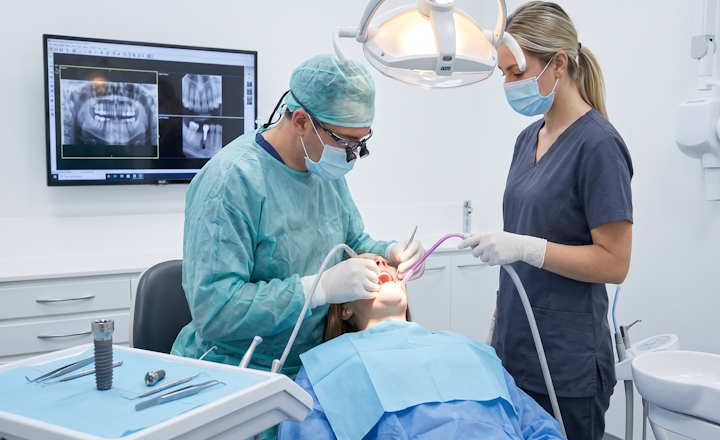
Knowing roughly what to expect after dental implant surgery can make a real difference in how prepared and calm you feel during recovery. While every patient heals differently, and specific guidance should always come from your treating dentist, this general timeline outlines the phases most patients go through from surgery day to full healing.
Day of Surgery
Immediately after the procedure, it's common to experience some numbness from local anaesthetic, mild bleeding, and swelling around the surgical site. Your dental team will typically provide written aftercare instructions covering:
Pain management (which may include over-the-counter or prescribed medication, depending on your case)
Diet guidance for the first 24–48 hours, often soft or liquid foods
What to avoid, such as rinsing vigorously, using straws, or smoking, which can interfere with healing
Signs that would warrant contacting the practice, such as excessive bleeding or severe pain
If you've had sedation or general anaesthetic, you'll usually need someone to drive you home and stay with you for the remainder of the day.
First Week
Swelling and bruising, if present, typically peak within the first two to three days before gradually subsiding. Some discomfort during this period is common and generally manageable with the pain relief plan discussed with your dentist.
Patients are usually advised to:
Stick to a soft food diet
Maintain gentle oral hygiene as instructed, often avoiding brushing directly on the surgical site initially
Avoid strenuous exercise for a few days, as increased blood pressure can affect healing and bleeding
Attend any early follow-up appointment scheduled to check on healing progress
Any concerns during this period — unusual swelling, persistent bleeding, fever, or increasing rather than decreasing pain — should be reported to your dental team promptly rather than waiting for a scheduled review.
Weeks Two to Four
For most patients, initial swelling and discomfort resolve within one to two weeks, though this varies based on the extent of surgery (for example, whether multiple implants or additional procedures like grafting were involved). Diet can often be gradually expanded during this period, guided by your dentist's advice and your own comfort level.
This is generally still an early phase of healing internally, even if the surgical site looks and feels largely settled on the surface.
Months One to Six: Osseointegration
Beneath the surface, the implant is undergoing osseointegration. The process by which the titanium implant fuses with the surrounding jawbone. This is a gradual biological process and cannot be sped up regardless of how well the surgical site appears to have healed externally.
The exact duration varies between patients and depends on factors such as bone quality, the location of the implant, and individual healing response. Your dentist will typically schedule review appointments during this period to monitor progress, sometimes including imaging to assess integration before proceeding to the next stage.
During this time, if a temporary crown, bridge, or denture has been fitted, you may be advised to be cautious with certain foods or habits (like chewing ice or biting nails) that could place excess stress on the temporary restoration.
Fitting the Final Restoration
Once your dentist has confirmed adequate healing and integration, generally through clinical examination and sometimes imaging, the final crown, bridge, or prosthesis is made and fitted. This tends to be a more precisely fitted, durable restoration compared to any temporary used earlier in the process.
Long-Term Maintenance
Recovery doesn't end once the final restoration is fitted. Ongoing care plays a role in supporting the long-term success of the implant. This generally includes:
Regular brushing and cleaning around the implant as instructed by your dentist
Routine dental check-ups and professional cleaning
Prompt reporting of any looseness, discomfort, or changes around the implant site
Factors That Can Affect Your Personal Timeline
Individual healing varies, and some factors can lengthen the process, including smoking, certain medical conditions like uncontrolled diabetes, the need for bone grafting, or complications during healing. This is why the timeline above is general. Your dentist can give you a more specific estimate based on your own health and the extent of your treatment.
Preparing for Your Own Recovery
If you're planning implant treatment and want a realistic sense of your own likely recovery, it's worth discussing your specific health history with a team experienced in dental implants in Sydney, who can outline what to expect based on your individual case.
For patients undergoing full-arch treatment, recovery considerations for all-on-4 dental implants in Sydney follow a similar general pattern. However, the scope of surgery and temporary prosthesis management can differ from single-tooth implant recovery.
Every recovery is individual. The most reliable guidance will always come from your own treating dentist, who can factor in your specific procedure, health history, and healing progress — not a general online timeline.
About the Author This article was prepared in collaboration with the clinical team at Dental Implants on Miller, a Sydney dental practice supporting patients through dental implant treatment and recovery. Healing timelines vary between individuals, and any concerns during recovery should be directed to your treating AHPRA-registered dental practitioner.