
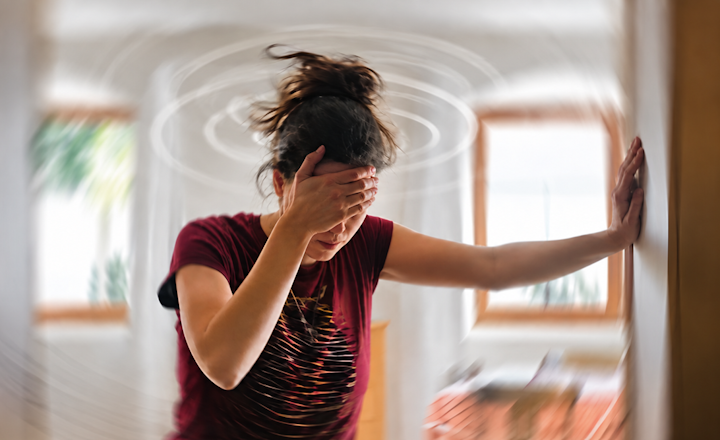
Most people over 70 have felt it at some point. A sudden head-spin when you stand up — usually it vanishes in seconds. It is far too easy to brush it off as a minor tax of getting older.
But that "nothing" is often the first sign of something worth watching. Falls remain one of the biggest causes of injury among older Australians, and unsteadiness or dizziness shows up months before a real fall.
These early warnings rarely get mentioned to a doctor, let alone checked out properly.
Why Balance Changes With Age
Staying upright is a really big team effort than you would realise.
The brain figures out where the body is in space by using information from three main areas:
- The eyes- The inner ear
- The joints and muscles in the neck
Ageing chips away at each, at different rates in different people.
Eyesight gets a little worse. Inner ear balance sensors lose some sharpness. Neck joints stiffen, often from years of poor posture or old injuries.
On their own, these little glitches seem harmless. Together, they mean your body takes a beat longer to catch up when you stand or twist.
Common Causes of Dizziness in Older Adults
"Dizzy" can mean several different things medically — and they don't all share one cause.
- Sometimes it's BPPV, where tiny crystals in the inner ear shift out of place and trigger spinning with certain head movements.- Other times, it's a blood pressure drop on standing, often linked to medication.
- The neck can play a role too — stiff or restricted upper spine joints can throw off the signals the brain relies on for orientation, known as cervicogenic dizziness.
Medications themselves matter as well (since dizziness is a listed side effect of plenty of prescriptions), and the risk climbs with several taken together. Sometimes it's simply a gradual decline in inner ear function.
These causes overlap enough that guessing isn't really an option. Treating the wrong one, or nothing at all, leaves the fall risk sitting there.
Why It Matters More Than People Think
The problem with dizziness is that it doesn't feel serious in the moment. A few seconds of lightheadedness, then it simply disappears.
But research keeps drawing the same line between dizziness, balance trouble, and a higher chance of falling, and a fall does far more damage to an older adult than to someone younger. Getting vertigo treatment in Brisbane early prevents a minor dizzy spell from turning into a major health crisis.
There's a knock-on effect too. After a fall or a close call, fear sets in. People avoid stairs, skip walks, and hold onto walls more than before.
It feels safer. But less movement means weaker muscles, and weaker muscles mean a higher chance of falling next time.
Warning Signs Worth Acting On
A few signs suggest it's time to get checked rather than wait it out:
- Feeling unsteady when turning the head or getting out of bed- Reaching for furniture more than before
- Dizziness lasting more than a few seconds
- Losing confidence on uneven footpaths or grass
- Any near-fall or fall in the past year
Even one of these is worth mentioning to a health professional.
A Team Approach Works Best
No single professional usually has the whole picture.
A GP is a sensible start, mainly to rule out medication side effects or other causes. An audiologist can check inner ear function, and a straightforward eye test shouldn't be skipped, since vision does more heavy lifting in balance than people expect.
The musculoskeletal side tends to get overlooked, though it's just as relevant. Stiffness in the neck, changes in posture, restricted joints — these can feed into that unsteady feeling, and manual therapy has a genuine role alongside medical treatment.
That's roughly where a practice like Prime Health Hub fits in. The practitioners at this Brisbane osteopathic clinic look at neck mobility, posture, and other musculoskeletal factors linked to dizziness as part of a broader approach to reducing falls risk.
Anyone noticing more unsteadiness than usual could do worse than start that conversation.