
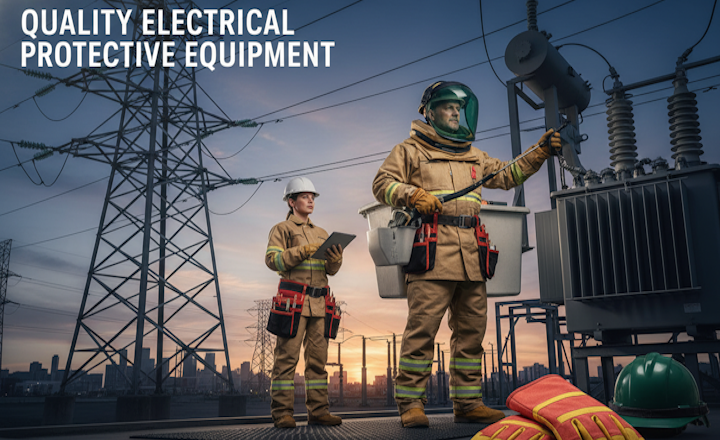
Electrical infrastructure depends on performance, but it also depends on protection. In demanding operating environments, even well-designed systems can be exposed to conditions that increase wear, raise safety risks, and affect long-term reliability. That’s why electrical protective equipment matters. It helps shield critical assets, support safer operation, and reduce the likelihood of faults that can disrupt service or damage infrastructure.
For organisations working across utilities, industrial sites, transport networks, and major infrastructure projects, choosing the right supplier can make a material difference. An experienced provider such as Balmoral Engineering can help ensure that electrical protective equipment is suited to the conditions, compliance requirements, and performance demands of the application.
Protection shouldn’t be treated as an afterthought. In many cases, it’s one of the things that determines whether infrastructure performs consistently over time or becomes vulnerable to avoidable failure.
Protection Supports Infrastructure Reliability
Electrical assets are often expected to operate continuously in environments that are far from controlled. Exposure to weather, contamination, mechanical stress, corrosion, and environmental variation can all affect performance if protective measures aren’t properly considered.
Quality electrical protective equipment helps reduce that exposure. It creates a buffer between the asset and the conditions around it, supporting durability and helping infrastructure maintain performance over the long term. That’s especially important where assets are remote, difficult to service, or costly to replace.
Reliability isn’t just about the primary component doing its job. It’s also about whether the surrounding protection is strong enough to help that component keep doing its job under real-world conditions.
Safety Depends on More Than Core System Design
Safe infrastructure doesn’t come from design alone. It comes from the way the whole system is protected, enclosed, supported, and managed in operation.
Electrical protective equipment contributes to that by helping reduce the risk of contact, damage, fault escalation, and premature deterioration. In practical terms, it can help protect workers, contractors, nearby assets, and the broader system from issues that might otherwise grow into more serious incidents.
That matters in any setting, but it becomes even more important in high-voltage environments, public-facing infrastructure, or sites where operational continuity is critical. Strong protective measures help create safer conditions not only at commissioning, but throughout the life of the asset.
Harsh Environments Demand Better Protection
Many Australian infrastructure environments are tough on electrical systems. Heat, UV exposure, moisture, wind, dust, salt, and corrosive conditions can all shorten asset life if equipment isn’t properly protected.
That’s one reason quality matters so much. Protective equipment has to do more than exist on a specification sheet. It needs to hold up in the field, under the actual conditions the infrastructure will face. If it degrades too quickly, performs inconsistently, or fails under pressure, the consequences can extend well beyond a single component.
For operators and project teams, this makes durability a practical priority. Better protection often means fewer failures, lower maintenance pressure, and stronger long-term value.
Compliance Is Only the Starting Point
Meeting standards is essential, but minimum compliance shouldn’t be the only goal when selecting protective solutions.
In critical infrastructure, the real question is whether the equipment will perform reliably in service, not just whether it technically qualifies for use. Quality electrical protective equipment should support both compliance and confidence. It should be appropriate for the application, manufactured to a strong standard, and capable of performing as expected over time.
This is where supplier credibility matters. Businesses need confidence that the products being used aren’t just nominally suitable, but genuinely fit for purpose in the environments where they’ll be deployed.
The Cost of Poor Protection Is Often Delayed
One of the challenges with electrical protective equipment is that poor choices don’t always fail immediately. Problems may emerge gradually through wear, environmental degradation, maintenance burden, or fault events that occur long after installation.
That delay can make protection seem less important during procurement, especially when cost pressure is high. But the downstream cost of inadequate protection can be significant. It may show up through service interruptions, rework, asset replacement, safety incidents, or greater whole-of-life expense.
A better approach is to treat protection as part of the infrastructure’s core value. When the protective elements are strong, the system is better positioned to perform consistently and safely over time.
Good Suppliers Add Practical Value
Choosing electrical protective equipment isn’t only about product selection. It’s also about whether the supplier understands the operating environment and can support practical decision-making.
A good supplier should be able to advise on suitability, application context, durability expectations, and the broader performance demands surrounding the asset. They should understand that infrastructure projects don’t happen in isolation. Protective equipment needs to align with installation conditions, maintenance realities, and long-term operating requirements.
That kind of practical input can help reduce risk early, before unsuitable products become embedded in the project.
Protection Is Part of Responsible Asset Management
Modern infrastructure owners are expected to think beyond immediate installation outcomes. They’re expected to consider safety, durability, lifecycle cost, environmental exposure, and long-term performance as part of responsible asset management.
Quality electrical protective equipment supports that broader approach. It helps infrastructure operators reduce preventable issues and build greater resilience into the systems they manage. In that sense, protection isn’t a minor technical detail. It’s part of how organisations demonstrate operational discipline and long-term thinking.
This is particularly relevant for essential infrastructure, where failures can affect not just internal operations, but customers, communities, and public confidence.
Better Protection Supports Better Outcomes
Quality electrical protective equipment matters because it helps infrastructure stay safer, more reliable, and better prepared for the realities of operation. It protects critical assets from avoidable harm, supports compliance and safety objectives, and contributes to stronger long-term performance.
For project teams and asset owners, that makes protection a strategic consideration rather than a peripheral one. The right protective solutions help reduce risk where it counts, in the field, over time, and under pressure.
In practical terms, safer infrastructure often depends on details that don’t attract much attention when everything is working properly. Electrical protective equipment is one of those details. When it’s chosen well, it quietly supports the resilience and safety of the entire system.
| < Prev | Next > |
|---|