
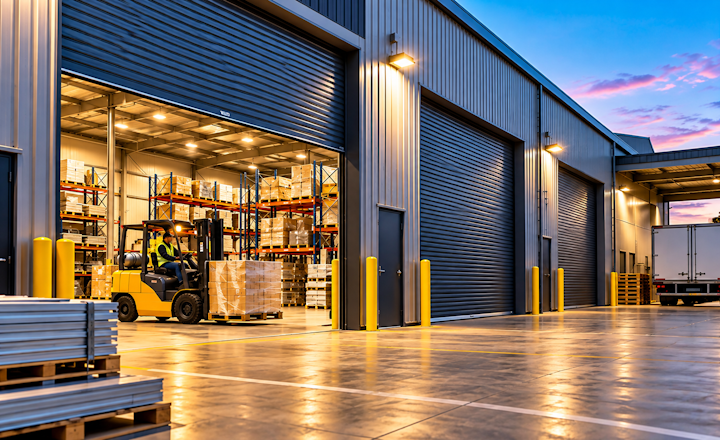
In a warehouse or factory, the doors do a lot more than open and close. They control the flow of stock, vehicles and people, protect equipment and inventory, and help keep the site running efficiently every day.
When a door fails, jams or can't keep up with demand, the impact is felt quickly. Deliveries back up, staff wait around and security can be compromised.
Choosing the right industrial roller shutters in Adelaide is an investment in security, safety and productivity. This guide covers what to consider before you buy.
What Makes Industrial Shutters Different?
Industrial roller shutters are built for heavier use and larger openings than standard commercial shutters. They're commonly installed on loading docks, warehouse entries, factory bays, workshops and storage facilities.
Because they're often opened and closed many times a day, they need to be strong, reliable and easy to operate. Many are motorised to handle their size and weight, and can be designed to suit specific operational needs.
Where Industrial Shutters Are Used
Across Adelaide's industrial hubs, from Wingfield and Regency Park to Lonsdale and Edinburgh Parks, industrial shutters are used in a wide range of settings, including:
Warehouses and distribution centres
Manufacturing plants and factories
Transport and logistics depots
Mechanical and fabrication workshops
Cold storage and food processing facilities
Agricultural sheds and machinery storage
Each environment has different demands, which is why selecting the right specification matters.
7 Things to Consider When Choosing Industrial Roller Shutters
1. Size of the Opening
Industrial openings can be very large, especially where trucks, forklifts or machinery need access. Accurate measurements are essential, and the shutter must be designed to suit both the width and height of the opening.
Consider the largest vehicles or loads that will pass through, now and in the future.
2. How Often It Will Be Used
A shutter that opens a few times a day has different requirements from one that operates constantly during a busy shift. Frequency of use affects the choice of motor, components and maintenance schedule.
Talk to your installer about your site's daily operations so the system is built to handle the workload.
3. Material and Strength
Steel is a common choice for industrial settings because of its strength and security. Aluminium is lighter and resistant to corrosion, which can suit certain applications.
The right option depends on the level of security required, the size of the opening and the environment, including exposure to weather, dust or moisture.
4. Wind and Weather Conditions
Large openings can be exposed to strong winds, dust and heat, particularly on open industrial sites. Shutters should be suited to the conditions at your location.
Your installer can advise on options that help the shutter perform reliably in Adelaide's climate, from hot, dry summers to winter storms.
5. Insulation and Temperature Control
For facilities storing temperature-sensitive goods, or where staff work in large open spaces, insulated shutters may help reduce heat transfer. This can support more comfortable working conditions and help manage energy use.
6. Motorisation and Controls
Motorised shutters make operating large doors quicker and safer. Controls can range from wall switches and remotes to options that integrate with broader access control or security systems.
It's also important to plan for power outages. Ask about manual override options so the shutter can still be operated if needed.
7. Safety Features
Workplace safety should be a priority. Depending on the system, safety features may include sensors or safety edges that help stop the shutter if something is in its path.
Under work health and safety laws, businesses have obligations to manage risks in the workplace. Well-designed, properly maintained shutters form part of a safe site, alongside clear signage, staff training and traffic management around doorways.
The Cost of Downtime
For many businesses, a faulty shutter isn't just an inconvenience. It can halt deliveries, delay dispatch and leave a site less secure.
Investing in quality equipment and regular servicing can help reduce the risk of unexpected breakdowns. When comparing quotes, it's worth considering long-term reliability and support, not just the upfront price.
Maintenance and Servicing
Industrial shutters work hard, so regular maintenance is essential. A good maintenance plan may include:
Inspecting slats, guides and bottom rails for damage
Checking motors, controls and safety features
Cleaning tracks to remove dust and debris
Lubricating moving parts as recommended by the manufacturer
Addressing unusual noises or slow operation promptly
Scheduling servicing outside peak operating hours can help minimise disruption. Keeping records of maintenance also supports your workplace safety processes.
Repairs vs Replacement
If an existing shutter keeps breaking down, repairs may only provide a short-term fix. Older systems can become less reliable over time and may lack features found in newer models.
A professional assessment can help determine whether repairs are worthwhile or whether replacing the shutter is the more practical long-term option.
Choosing an Experienced Supplier
Look for a supplier with experience in industrial installations who takes the time to understand how your site operates. They should provide a detailed quote, explain the options clearly and offer ongoing servicing and support.
Local specialists supplying roller shutters in Adelaide understand the local climate and industrial environments, and can recommend solutions suited to warehouses, factories and commercial sites across the city.
Final Thoughts
Industrial roller shutters play a key role in keeping warehouses and factories secure, efficient and safe. By considering size, usage, materials, weather conditions, safety features and maintenance, businesses can choose a system that supports daily operations for years to come.
The right shutter doesn't just protect your site. It helps keep your business moving.
| < Prev | Next > |
|---|