


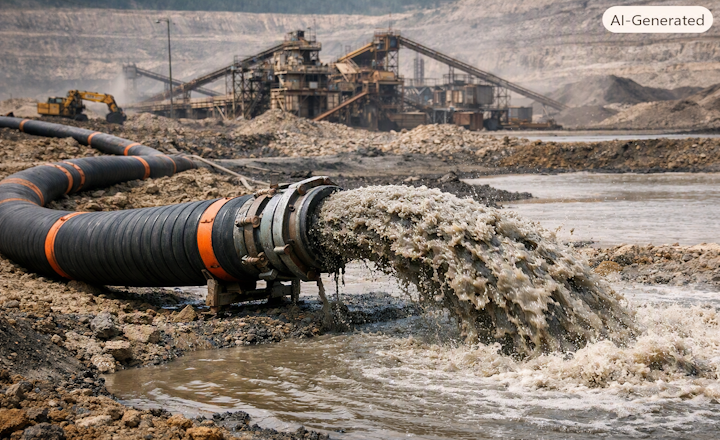
Choosing a mining hose requires careful consideration of the material being transferred, operating pressure, flow velocity, solids concentration, particle characteristics, hose diameter, routing, and surrounding site conditions. Mining operations often rely on transfer systems to move slurry, water, mineral mixtures, and other materials between different stages of a process. When a hose is not suited to the actual duty, accelerated wear, leakage, flow restrictions, and unexpected failure can interrupt production. A structured selection and maintenance approach can help operators reduce avoidable downtime and manage critical transfer lines more effectively.
Start With Detailed Application Information
A hose should not be selected using diameter alone. Two transfer lines of the same size may operate under completely different conditions.
The type of material, solids content, particle size, density, temperature, pressure, and required flow should all be considered. Transfer distance and elevation changes can also influence system requirements.
Providing accurate operating data creates a stronger basis for equipment selection. If conditions vary during a shift or between production stages, the full operating range should be reviewed rather than only the most common value.
Understand How Abrasive Materials Cause Wear
Mineral slurries and other mixtures can gradually wear internal surfaces as particles move through the hose. The rate and pattern of wear depend on several factors.
Sharp or angular particles may create different abrasion from smoother materials. Larger solids can also produce greater impact, particularly where the transfer path changes direction.
Wear is not always evenly distributed. Some sections may remain serviceable while bends, transitions, or other high-impact areas deteriorate more quickly. Inspection plans should reflect these differences.
Consider Flow Velocity Carefully
Flow velocity affects both transfer performance and internal wear. If slurry moves too slowly, solids may settle and create restrictions or blockages.
Excessive velocity can increase the energy with which particles contact internal surfaces. This may contribute to faster deterioration, especially in abrasive applications.
The appropriate operating range depends on the material and system. Pump capacity, hose diameter, transfer distance, pressure, and slurry characteristics should be reviewed together before changes are made.
Match Hose Diameter to System Requirements
Internal diameter influences velocity, pressure loss, and the amount of material that can move through the system. A line that is too small may create excessive resistance and increase wear.
A larger hose may reduce velocity but can introduce other practical issues. Large assemblies are heavier, more difficult to position, and may not match existing equipment.
The selected diameter should support the required flow while remaining compatible with the pump, fittings, and installation. A system-level assessment is more useful than choosing a size based on one factor.
Plan the Route Before Installation
Poor routing can reduce hose life even when the product is otherwise suitable for the application. Tight bends, unsupported sections, and contact with sharp surfaces can create additional stress.
The hose should not be forced into a bend below its recommended limits. A restricted bend may reduce the internal flow area and concentrate mechanical loading.
The route should also consider vehicles, machinery, falling material, and work areas where the hose could be crushed or dragged. Planning before operation can reduce exposure to predictable hazards.
Pay Special Attention to Bends
Direction changes can become high-wear areas in abrasive transfer systems. Particles may contact the outer radius of a bend more heavily as the flow changes direction.
The degree of wear can depend on particle size, velocity, solids concentration, and bend geometry. Regular inspection of these locations can help identify deterioration early.
If one bend repeatedly fails before the rest of the line, the routing or operating conditions may need review. Replacing the same component without investigating the cause may lead to repeated downtime.
Manage the Weight of Filled Hoses
A large-diameter hose carrying dense material can become extremely heavy. This weight may place significant force on supports, couplings, and connected equipment.
Unsupported sections can sag and create sharp bends near fittings. These conditions may contribute to localised stress and premature damage.
Support systems should be designed for operating conditions rather than only the empty hose. If equipment is relocated, the supports and hose alignment should be reviewed again.
Check Couplings and Fittings Regularly
A transfer line is only as reliable as its connections. Couplings, clamps, seals, adaptors, and hose ends can all become potential failure points.
Components should be compatible with the hose dimensions, construction, pressure, and connected equipment. Poor alignment can create additional stress near the connection.
Inspection should look for leakage, movement, corrosion, damaged seals, and deformation. Problems at fittings should be addressed before they affect the wider system.
Protect the Hose From External Damage
Mining environments can expose hoses to rough ground, machinery, sharp edges, and falling material. External damage may develop even when internal wear remains within acceptable limits.
Dragging should be reduced where practical. High-traffic areas may require alternative routing or suitable protection.
Visual inspections can identify cuts, severe cover abrasion, flattening, and exposed reinforcement. These signs should not be ignored simply because the hose is still transferring material.
Create an Inspection Schedule Based on Risk
Not every hose requires the same inspection frequency. Critical lines operating continuously with highly abrasive material may need closer attention than less demanding systems.
The schedule should consider operating hours, material characteristics, previous wear history, movement, and the consequences of failure.
Inspection records can help maintenance teams compare condition over time. Consistent documentation may reveal patterns that are difficult to identify through occasional visual checks alone.
By using operating data and maintenance history to guide decisions, mining operations can identify recurring problems and improve future installations. A planned approach to selection, inspection, and replacement can support more consistent material transfer and reduce preventable interruptions in demanding site conditions.
| < Prev | Next > |
|---|