
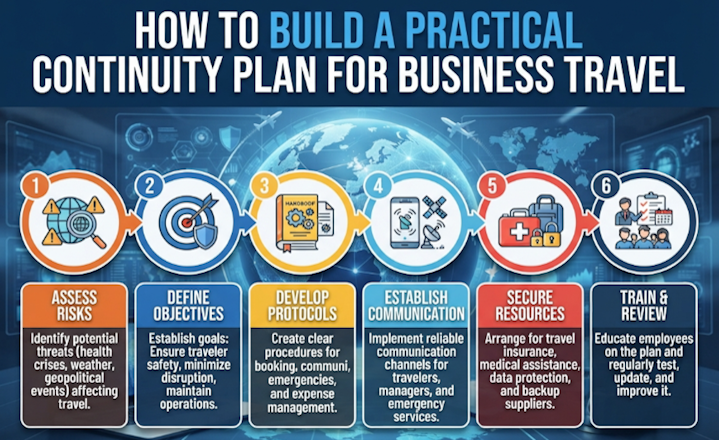
International business travel can turn a normal working week into a chain of dependencies. A delayed flight affects the meeting schedule, a lost phone can block account access, and an unfamiliar hotel network may become the only connection available before a deadline. A compact continuity plan helps a traveller keep essential work moving without carrying the entire office abroad.
Mobile access is one layer of that plan. Australian teams can review options from TravelKon, then check destination coverage, handset compatibility and plan conditions before departure. The organisation's security policy should determine how work systems are accessed; convenience does not override requirements for approved devices, authentication or data handling.
Define What Must Continue
List the tasks that genuinely cannot wait until the traveller returns. Assign a colleague to monitor everything else and document who can approve urgent decisions. A short handover with owners, deadlines and escalation routes is more useful than forwarding an entire inbox.
Tell key contacts when responses may be delayed and provide a central office route for emergencies. This protects the traveller's meeting time and prevents clients from depending on a single mobile number.
Carry Less Business Data
Download only the files required for the trip and use approved cloud services or virtual access where policy permits. Avoid storing broad client archives on a travel laptop. Encrypt supported devices, use strong passcodes and ensure that screen locks activate quickly.
The Australian Cyber Security Centre's security tips for travelling cover device, account and network precautions before and during a journey. Organisations should apply their own risk assessment, especially when staff handle commercially sensitive or regulated information.
Build Redundancy Into Access
Confirm that multi-factor authentication will work abroad and that recovery does not depend solely on the phone being carried. Keep backup codes through an organisation-approved secure method. Test the required conferencing, document and expense applications before leaving.
Carry a suitable power adapter, charging cable and compliant portable battery. Important contact numbers, hotel details and the next meeting address should be available offline, but credentials should never be placed in an unprotected note.
Set Rules For Public Spaces
Airport lounges, trains and cafés are not private offices. Position screens away from passers-by, use a privacy filter where appropriate and avoid discussing confidential matters within earshot of strangers. Lock the device whenever it leaves the hand, even for a brief interruption.
Unknown wireless networks should be treated cautiously. Follow company policy on approved mobile connections and virtual private networks, and do not install certificates or software offered through an unexpected login page.
Practise The Lost-Device Response
Before travel, record who must be contacted if equipment is lost or stolen. Enable approved device-location and remote-management functions, and understand when the organisation will lock or erase a device. Quick reporting matters even when the traveller believes the hardware may be recovered.
After returning, submit expenses, remove temporary access, report any unusual account activity and transfer useful notes into the normal business system. The purpose of continuity planning is not to work constantly from another country. It is to protect the few essential operations that matter, so the traveller can focus on meetings, relationships and decisions that require being there in person.
Managers should review the plan after each trip. A missed notification, unavailable approval or difficult recovery step is evidence for improving the process, not merely an inconvenience for one employee. Record the lesson without collecting unnecessary personal travel detail, then update the shared checklist and responsible owner. Small operational corrections compound across a team that travels regularly.
A useful review also asks whether the journey achieved something that remote work could not. Clear objectives, prepared meetings and timely follow-up make the environmental and financial cost easier to justify. Continuity planning protects normal operations; disciplined trip design ensures the time away creates lasting business value.
| Next > |
|---|