
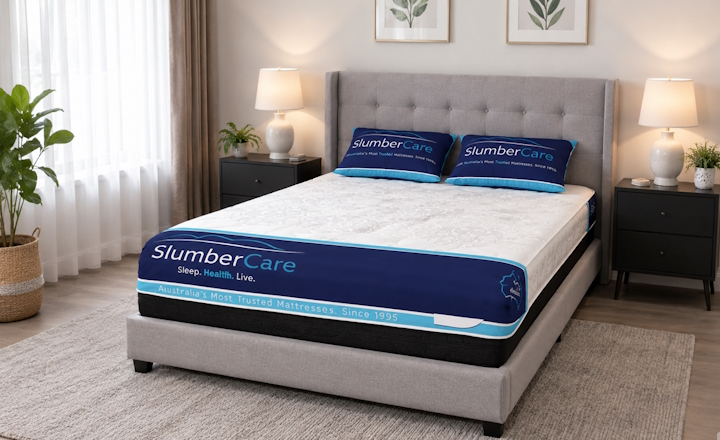
Waking up with a stiff lower back or aching hips is one of the clearest signs that a mattress isn't doing its job properly. Roughly one in six Australians live with some form of chronic back pain, and for many of them, sleep ends up being as much a source of discomfort as it is a source of rest. A mattress will not cure back pain on its own, but the right one can remove one of the biggest daily aggravators of it.
This is where orthopedic support mattresses come into the picture. They are built specifically around spinal alignment rather than plush comfort alone, and in Perth, where older double beds and a mix of sagging pocket spring mattresses are common culprits behind restless nights. This article walks through what orthopedic support actually means, what to check before buying one and how to match a mattress to the way you actually sleep.
Why Your Mattress Matters More Than Most People Realise
A healthy spine has a gentle natural curve, and a supportive mattress should hold that curve while you sleep. It should not flatten it, and it should not let it sag either. When a mattress is too soft or has worn unevenly, the heaviest parts of the body, typically the hips and shoulders, sink further than the rest of the body. That twists the spine slightly out of line for six to eight hours a night. Do that every night for a few years and it becomes easy to see how a tired old mattress turns into a quiet, ongoing contributor to lower back and hip pain, even if nothing about daily activity has changed.
The opposite problem happens with mattresses that are simply too firm. Instead of sagging, they push back hard against pressure points at the shoulders and hips, which can leave gaps under the lower back and neck where the body is not properly supported. The goal is not maximum firmness. It is even, consistent support across the whole body, distributed in a way that keeps the spine in something close to its natural resting position.
What Orthopedic Support Actually Means
Orthopedic gets used loosely in mattress marketing, so it is worth knowing what it should actually describe: a mattress engineered to distribute body weight evenly and keep the spine in a neutral position, usually through zoned support rather than a single uniform firmness across the entire surface. A genuinely orthopedic mattress typically combines a few features working together. These include zoned or graduated support layers that are softer at the shoulders and firmer through the lumbar area, a base that resists sagging over time, and a surface layer that cushions pressure points without letting them sink too far into the mattress.
These features can be built with pocket springs, foam, latex, or a hybrid combination of the two. The construction method matters less than whether the zoning and firmness are actually suited to the sleeper's body weight and preferred sleep position, which is why two mattresses both labelled orthopedic can feel completely different underneath the same person.
A Buying Guide: What to Check Before Choosing One
Before comparing specific models, it helps to have a short mental checklist. Most people shopping for an orthopedic mattress in Perth are weighing up the same handful of factors, whether they realise it or not.
Zoned or graduated support. Look for mattresses described as 5-zone, 7-zone, or similar, rather than a single flat layer of foam or springs that treats the whole body the same way.
Firmness matched to sleep position and body weight, rather than choosing medium as a default because it sounds like a safe middle ground.
Double-sided or flippable construction, which allows a mattress to wear evenly over years of use rather than developing a permanent body impression on one side only.
Edge support, especially if the mattress will regularly be sat on to get dressed or put shoes on.
A trial period or comfort guarantee, since proper spinal support can take a couple of weeks to feel the benefit of, and a fixed trial window matters more than it might seem at the point of purchase.
How Support Technology Works
Manufacturers in Perth build their orthopedic ranges around this zoned support approach rather than treating firmness as one size fits all. Models like the Vitality Premium use a 7+7 zone construction, distributing support differently across the shoulder, lumbar, and leg zones instead of relying on uniform firmness throughout the mattress. Several models in the range, including the Maestro, Commodore, and Wallaby, are also double sided, meaning the mattress can be flipped periodically to even out wear rather than developing a permanent dip where the body settles most often.
For sleepers who run warm, the Hybrid Contour combines gel infused foam with pocket spring support to manage both pressure relief and temperature at the same time. Every mattress in the range carries a 10 year guarantee, which is a reasonable proxy for how confident the manufacturer is in its own construction. Perth shoppers comparing options in person can browse online, which spans firmness levels from plush through to ultra firm double sided orthopedic models.
Matching Firmness to Your Sleep Position
Support needs change depending on how someone sleeps. Side sleepers generally need more give at the shoulder and hip so the spine stays level rather than tilting upward. A mattress that is too firm can leave the shoulder and hip unsupported and pull the spine slightly out of alignment from the side. Back sleepers usually do best on a medium firm surface that supports the lumbar curve without letting the hips sink too far. Stomach sleepers, who already put the least favourable strain on the lower back regardless of mattress choice, tend to need a firmer surface to stop the midsection sinking and arching the spine unnaturally.
Body weight shifts all of this too. Heavier sleepers typically need firmer support to avoid excess sinking, while lighter sleepers can feel a very firm mattress as unforgivingly hard rather than genuinely supportive.
Frequently Asked Questions
Is a firmer mattress always better for back pain?
Not necessarily, and this is one of the most common myths in mattress shopping. Extremely firm mattresses can leave gaps under the lower back and neck where the body is not properly supported. Medium firm support that follows the body's natural curve tends to be more effective for most people than maximum firmness alone.
How long does it typically take to adjust to a new mattress?
Most people need two to four weeks for their body to adjust to a new mattress, even a well suited one. This is exactly why a trial period or comfort guarantee is worth checking before buying. A mattress that feels unfamiliar in week one can feel genuinely right by week three.
Can a new mattress fix chronic back pain on its own?
On its own, no. A supportive mattress can reduce one of the ongoing aggravators of back pain, but persistent or severe pain is worth discussing with a GP or physiotherapist. Mattress choice works best as one part of a broader approach to sleep posture and spinal health, not as a standalone fix.
How often should an orthopedic mattress be replaced?
Most orthopedic mattresses last around 8 to 10 years with normal use, though double sided models can sometimes stretch that lifespan further, since flipping the mattress spreads wear more evenly across both surfaces rather than concentrating it on one side.
Conclusion
Back pain and poor sleep tend to feed each other. Pain makes it harder to sleep well, and a poor night's sleep makes pain feel worse the next day. Breaking that cycle usually starts with ruling out the mattress as a contributing factor. Zoned support, appropriate firmness for sleep position and body weight, and a mattress that has not sagged past its useful life are the fundamentals worth checking, whichever brand ends up in the bedroom.
| < Prev | Next > |
|---|